Rabbit farming in the Nysäter area
Rabbit is a common feature in Southern European cuisine and is increasingly appearing on menus and dinner tables in Sweden as well. The meat is light, tender, and lean, and resembles chicken in appearance.
Rabbit meat is the most climate-smart meat you can eat right now, if you choose to eat meat, according to the industry organization Sweden's Rabbit Producers Association. Swedes are eating meat like never before. On average, we consumed more than 86 kilograms, which is a new record level. In particular, the consumption of chicken and beef is increasing. However, beef burdens the environment through the emission of the greenhouse gas methane and goes against the desire for reduced climate impact.
We need to find alternative protein sources that do not deplete resources as much. We should eat more vegetables, less meat, and more fish. For example, we are trying to develop fish farming with a circular thinking, says Carl-Gustaf Thulin, head of the Center for Wildlife and Fish Research at SLU to Sydsvenskan. Carl-Gustaf Thulin's suggestion is that Sweden should invest in rabbit breeding.
Most recipes for pork, veal, and chicken also work well for rabbit after adjusting the cooking time. Rabbit meat is "dense" and therefore requires longer heating of at least one hour. See our recipes.
Meat type | Protein content | Fat content |
Rabbit | 21 % | 10 % |
Chicken | 20 % | 11 % |
Lamb | 16 % | 28 % |
Beef | 16 % | 28 % |
Pork | 12 % | 45 % |
Our hens
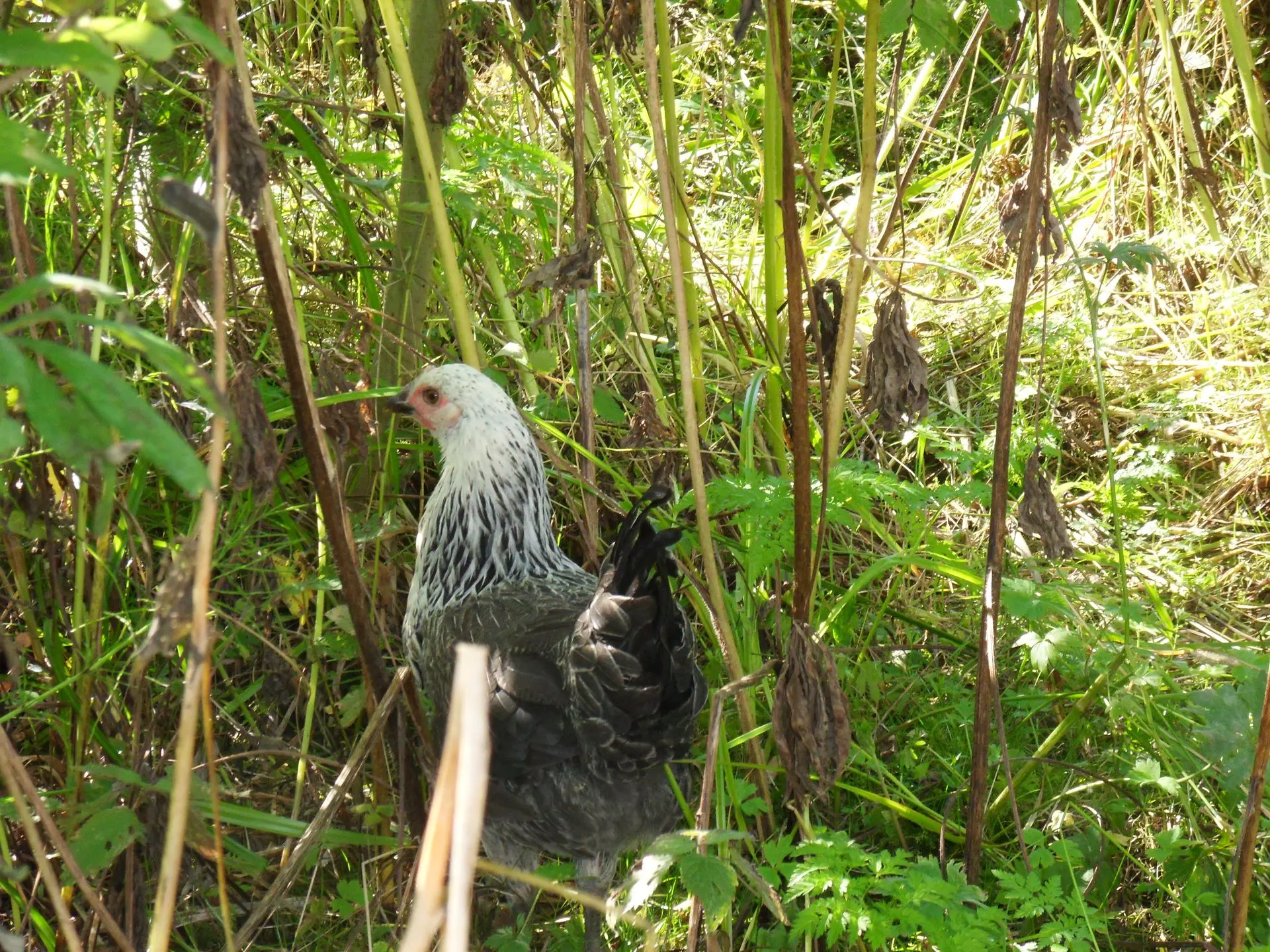
We breed Skåne Blossom Hens on a small scale and our flock currently consists of about six hens in mixed colors. They are free-range and there will be more in the future.
The Skåne Blossom Hen is one of our Swedish landrace breeds. The Blossom Hen is considered a large landrace and varies in color but has the characteristic 'blossom' spots.
The hens lay about 150 eggs a year but have, compared to other landrace breeds, a slightly lower proportion of hens that brood. This makes it more difficult to breed with them. Our hens are not connected to a gene bank, but perhaps that will come in the future.
Our ducks
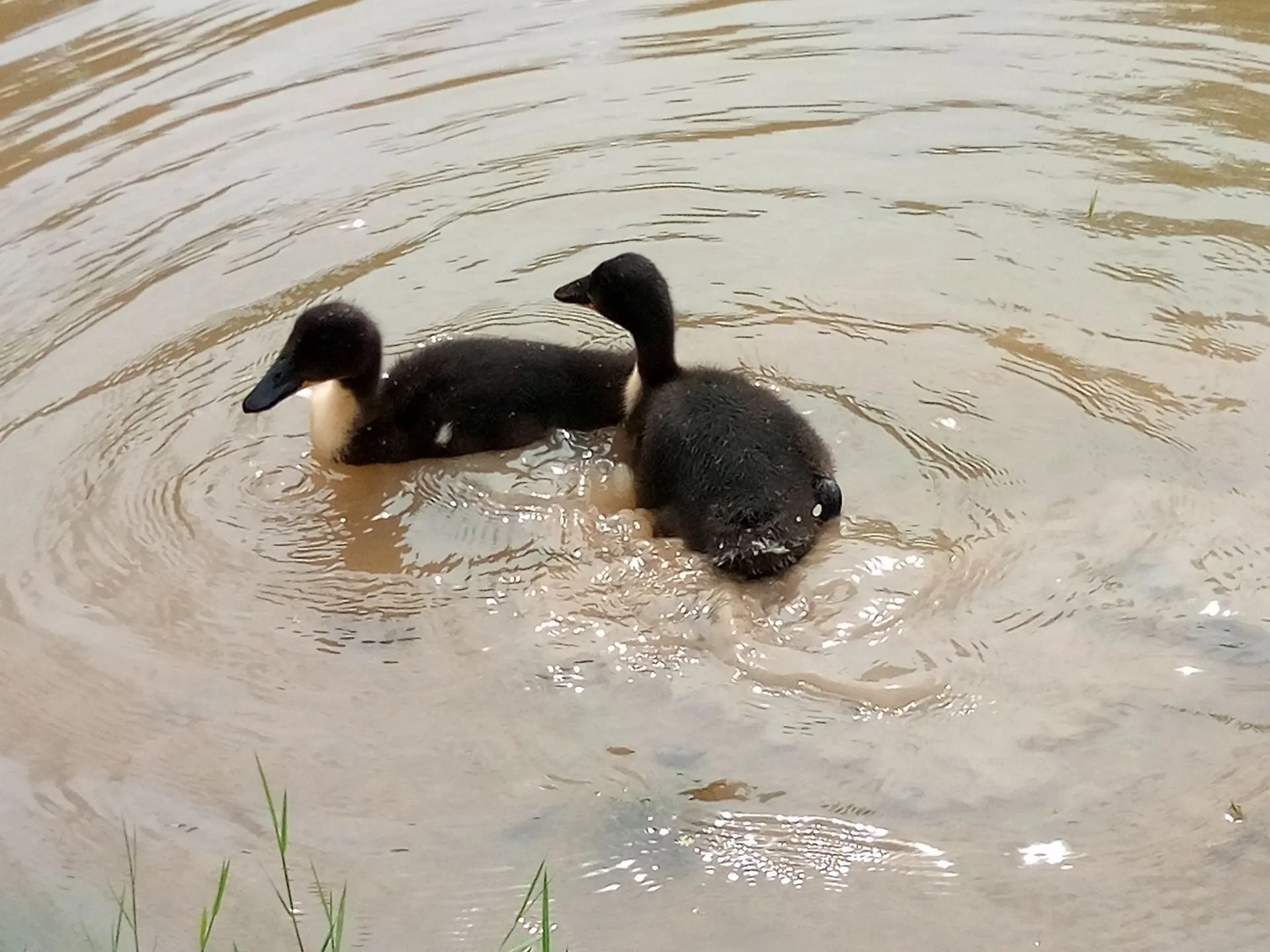
We have some blue ducks. The blue duck is a medium-sized duck. Despite the name, the blue duck is not always blue; the color varies between white, pearl gray, blue, and black.
We have created two ponds and enjoy the free life we give them. In the evening, they go in for protection against predators.
The breed has a horizontal body and a full breast, which makes it attractive from a culinary perspective. The easiest way to tell males and females apart is to look at the bill. Males have a light green-yellow bill. Females' bills are blue-green to black. A male weighs 3 – 4 kg and a female 2.5 – 3.5 kg.
Our ducks help us keep our snails in check and are pleasant as they curiously wander around us.